

'Pruksa' turns the COVID-19 crisis into an opportunity by aggressively moving to online channels to boost sales after customer visits to projects declined, reporting online sales growth of 50% 'Terra Media' seizes the opportunity by launching online services to help developers offload stock
Mr. Piya Prayong, Chief Executive Officer of Pruksa Real Estate's Value business group, Pruksa Real Estate Public Company Limited, revealed that the outbreak of the new strain of coronavirus, or COVID-19, has forced the company to adjust its plans to cope with the slowing purchasing power. In the short term, this means making the organization more agile and reducing costs, while also bringing in technology to help boost sales through online channels to a greater extent.
This is because customer behavior changed after the COVID-19 outbreak, with fewer people visiting projects. The company will use an artificial intelligence (AI) program to filter data, enabling precise access to target groups at a lower cost than using offline media.
Currently, sales through online channels have increased by 50% via various social media, including sales through distributors who also use online channels. The proportion of online sales is expected to increase further, even though customers still visit construction projects at the closing stage of sales.
The majority of customers are Thai, while Chinese customers will have to wait until the COVID-19 outbreak situation eases, which is expected in the second half of the year. It is expected that by then it should be a good opportunity for the Thai real estate market.

“Right now, the best way to stimulate sales is to sell online, because we cannot hold many activities in order to reduce the risk of spreading COVID-19, especially by using technology to communicate with customers instead.”
Miss Sumitra Wongphakdi, Director and Manager of Terra Media and Consulting Company Limited, a provider of real estate marketplaces and content, said that the trend of selling through online channels will increase following the COVID-19 outbreak situation.
This is because people's behavior has shifted to staying home more and using online channels to order goods and services instead of going out for safety. At the same time, real estate developers also see opportunities arising from the problem by expanding their sales channels online to a greater extent.
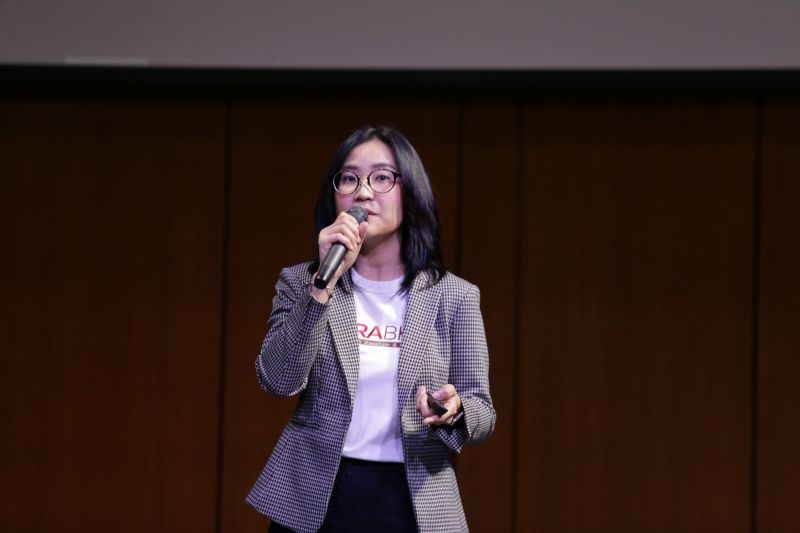
“In every crisis, there is always an opportunity. This situation presents an opportunity for online marketing, as people staying home has led to the phenomenon of booking homes online. However, other technologies may be needed as a complement, such as AR/VR technology (Virtual Reality & Augmented Reality) and hologram imaging technology, to present the form and appearance of projects and model rooms.
to create a realistic experience for customers, simulating the atmosphere of actual project rooms so customers can sense the environment while living inside them. This is considered a turning point that brings these technologies into the real estate business faster than usual.”
Ms. Sumitra said that in 2019, it was found that major real estate developers such as Sansiri, Ananda, Pruksa, and Supalai had adopted these technologies for booking real estate through online channels, as customers responded well because they were no longer concerned about not being able to physically touch or visit the property before purchasing as in the past.
Most recently, the company has prepared to launch the TERRA MARS : Online booking service, which will help operators sell products, both newly launched projects and discounted products (flash deals), with no system usage fees for operators. The back-end system of TERRA MARS can handle operations through to the completion of the booking money transfer process.
It connects with facial recognition systems, uses artificial intelligence programs to assess customers' purchasing capability, and also links with a home decoration platform that integrates AR and VR technologies together with 3D to help customers instantly estimate costs.
It is expected to attract interest from real estate developers, both those looking to release their existing product stock and those presenting units in newly launched projects, amid a situation where people do not want to leave home, and to accommodate people's new lifestyle of not wanting to waste time traveling to visit construction sites, as an extension that increases future sales opportunities and saves costs.