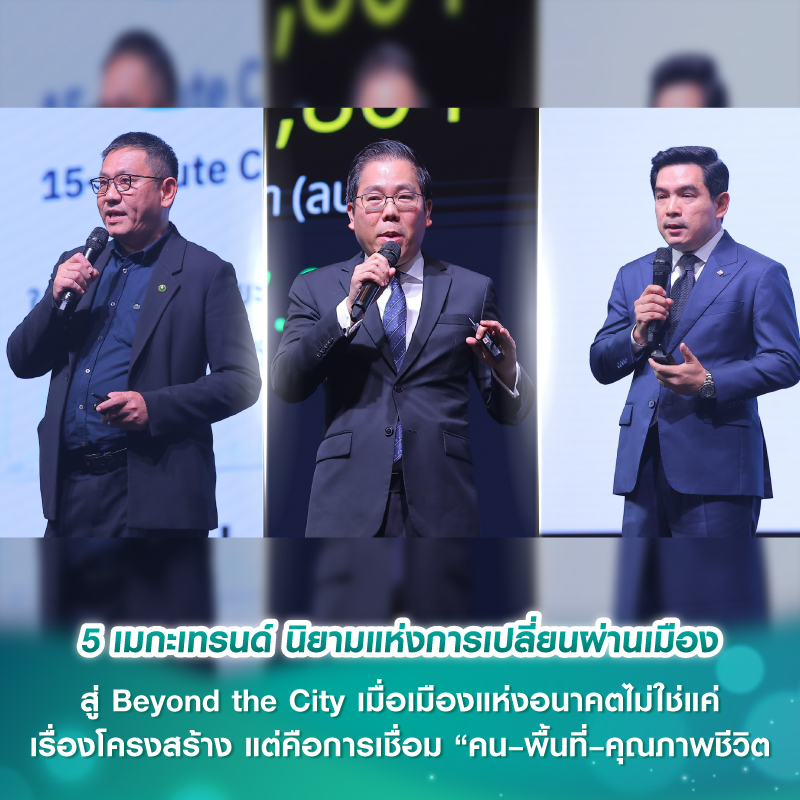
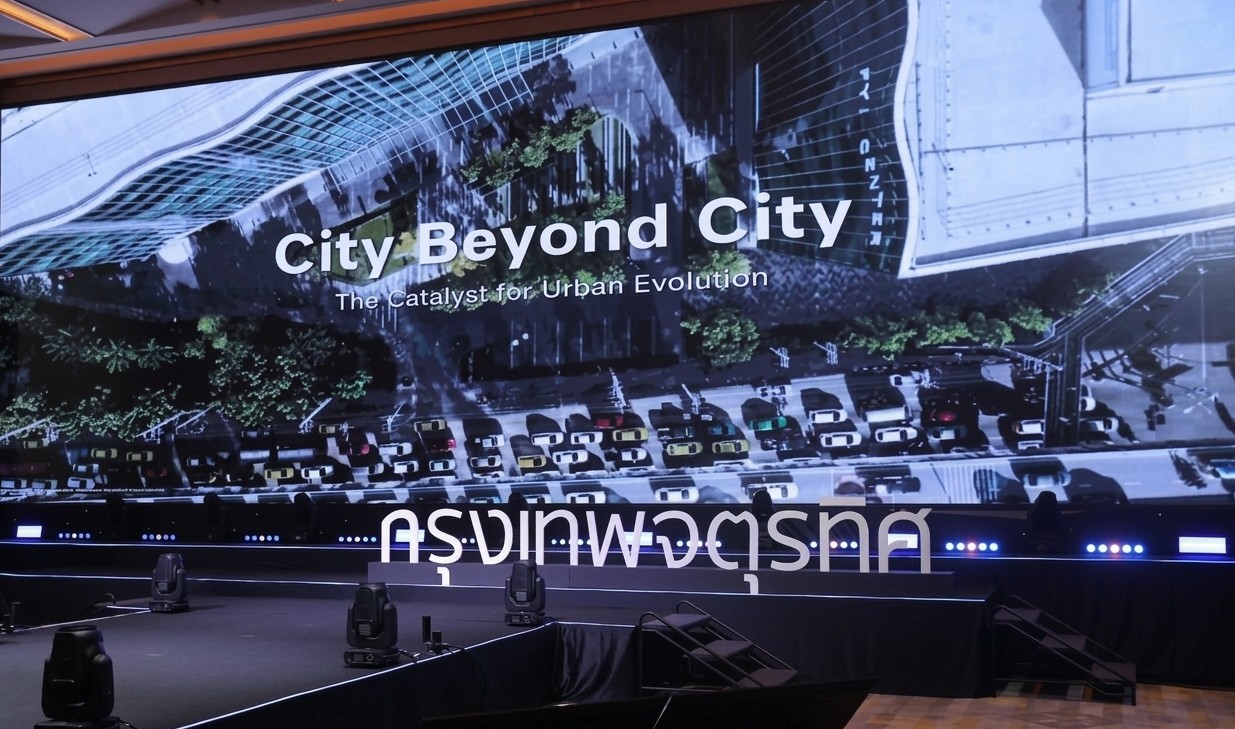
The city is changing, and this change is not only happening through the expansion of buildings, roads, or infrastructure, but is taking place in “ways of life” and “the concept of a city that connects people to one another.” prop2morrow organized the Bangkok Four Directions : Chaturamahonkol Beyond the City event, reflecting the transition of the city from its familiar form into a new era of the future city, driven by “5 new megatrends of the city”
1. TOD is becoming the “center of the city” As mass transit systems expand, Transit-Oriented Development, or TOD, does not just make people travel faster, but is changing the “direction of urban growth.” In particular, areas surrounding stations have the opportunity to be developed into new centers comprising residences, offices, shops, services, and public spaces. As a result, the overall picture of a city that once had a single center is expanding into a “network city” with multiple economic centers and new growth areas connected by the network.
2. 15 Minute City “The city of accessibility” In the past, many cities were designed with “travel” at the center, while residential areas, schools, workplaces, and recreational spaces were laid out separately from one another. This caused people in the city to spend a great deal of time traveling between different points. The 15-Minute City concept will shorten the time people in the city spend, while increasing their quality of life, by designing shops, schools, workspaces, green areas, health services, and daily-life activities to be close to one another, helping to reduce travel time.
3. Healthy City “A city that is good to live in” The Healthy City concept is becoming increasingly important, as a livable city in the future may not be the one with the most amenities, but the one that makes good health easiest to achieve in everyday life, such as having public parks, walkways, green spaces, air quality, safety, public space services, and spaces for social activities.
4. Climate Resilience & ESG The turning point toward a sustainable city An unavoidable change is the climate. As cities face heat, floods, and extreme weather events, urban design can no longer look only at “today.” Climate Resilience is therefore the city’s flexibility in responding to climate change—not just risk prevention, but the ability to forecast in advance, prepare response plans, and adapt when changes occur.
5. Hybrid Work When the “workplace” is no longer just one place. One of the clearest turning points of the modern city is the changing meaning of the word “workplace.” As technology enables people to work from a variety of locations, the line between home, workplace, and city becomes almost impossible to distinguish. For many people, home may be both a place of rest and a place to work
Cafés have become temporary workspaces, and Co-working Spaces have emerged as a new form of office. This change impacts not only the office market, but also the residential market, which must adapt to shifting demands. Therefore, the city of the future must support people’s lives with greater flexibility in terms of time, space, and lifestyle.
A new perspective… embracing the changing city. The 5 megatrends that have emerged are not only changing the “form” of the city, but are also transforming the mindset of the government sector, developers, and consumers to align with the city of the future
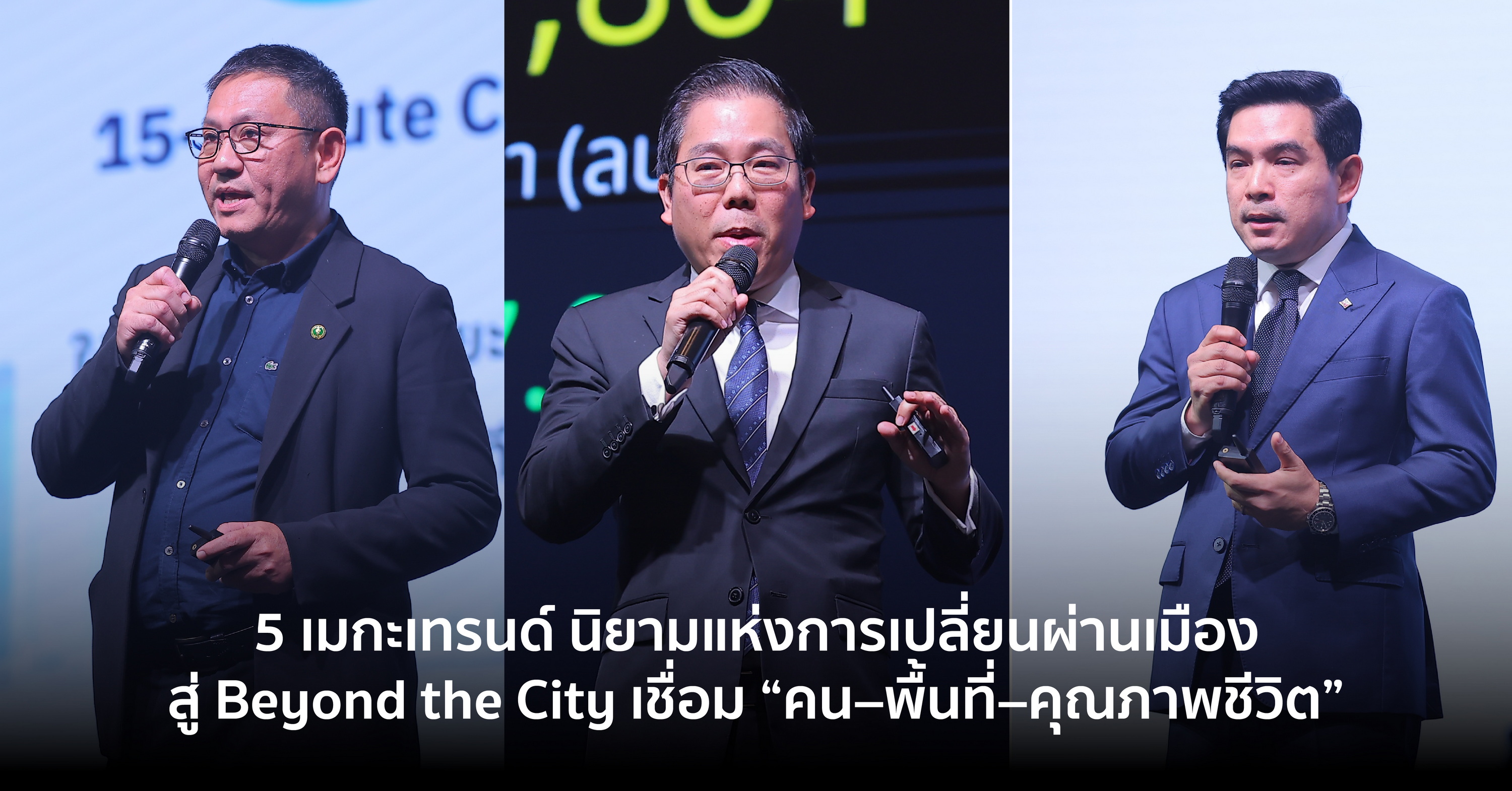
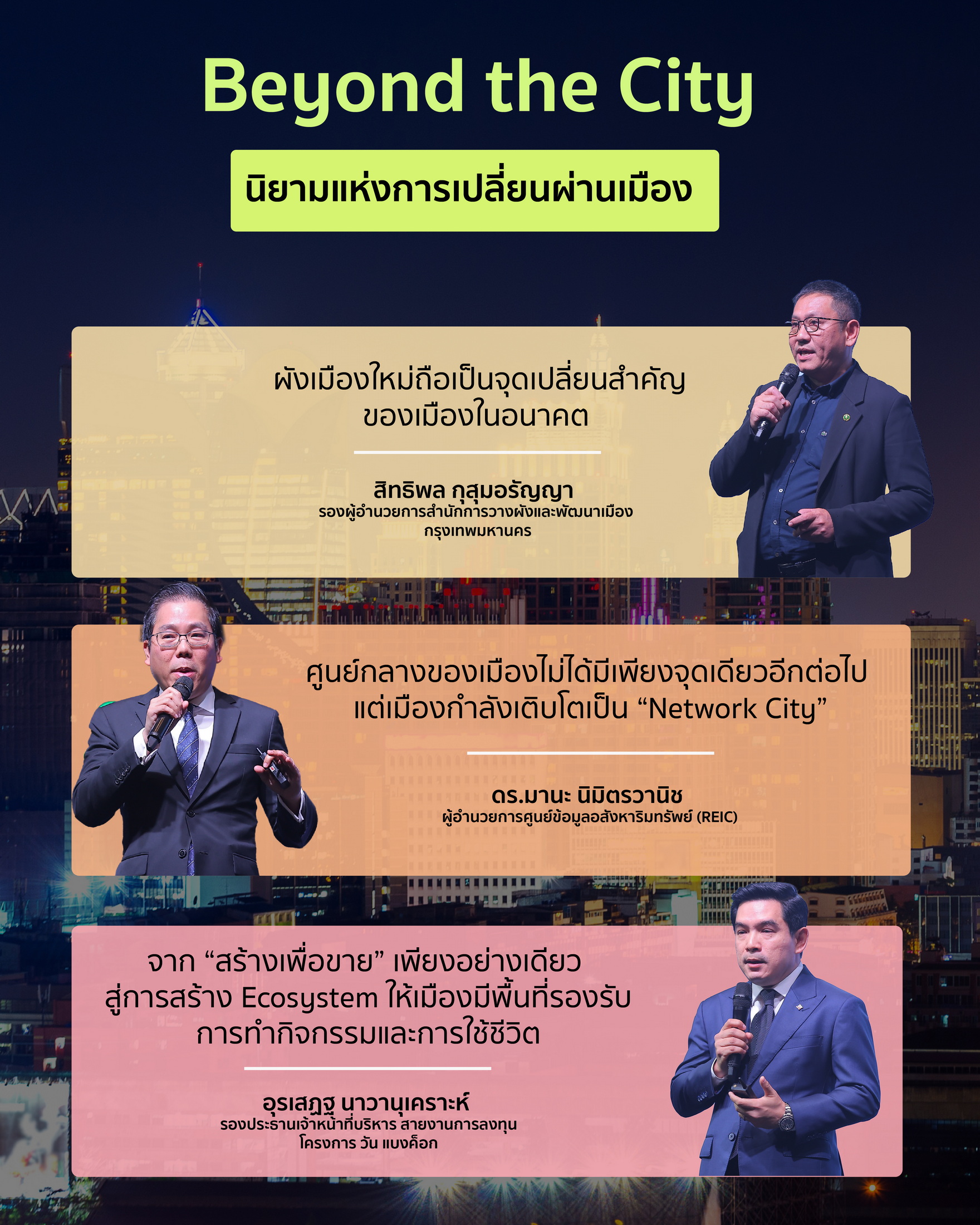
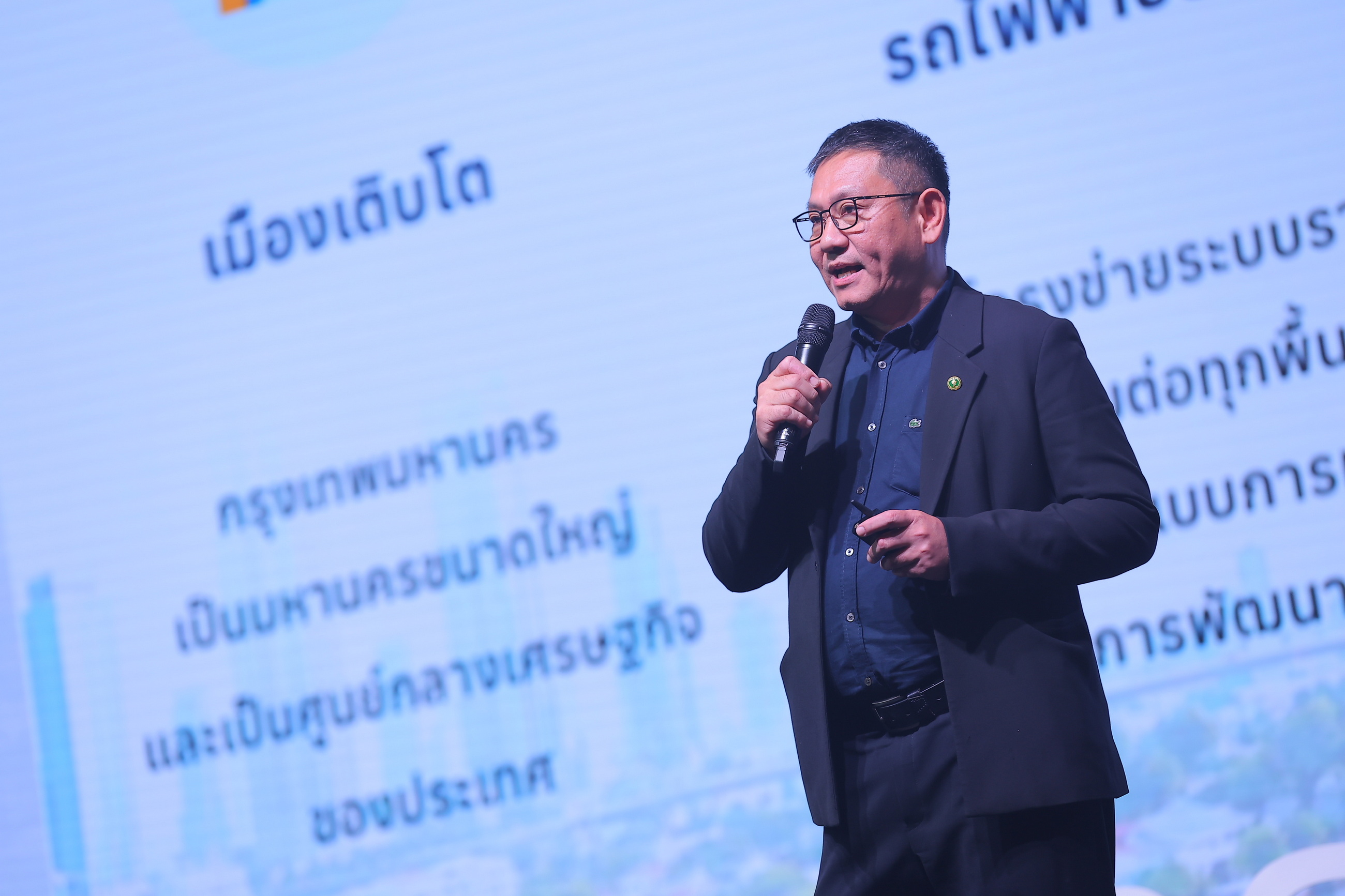
Sittipol Kusumaranya, Deputy Director-General of the City Planning and Urban Development Department, Bangkok Metropolitan Administration, views the new city plan as a crucial turning point for the city of the future, because the potential of each plot of land will no longer be judged solely by “what color zone the land is in,” but must take into account factors such as FAR, OSR, transportation systems, open space for activities, public utilities, drainage plans, and other related conditions.
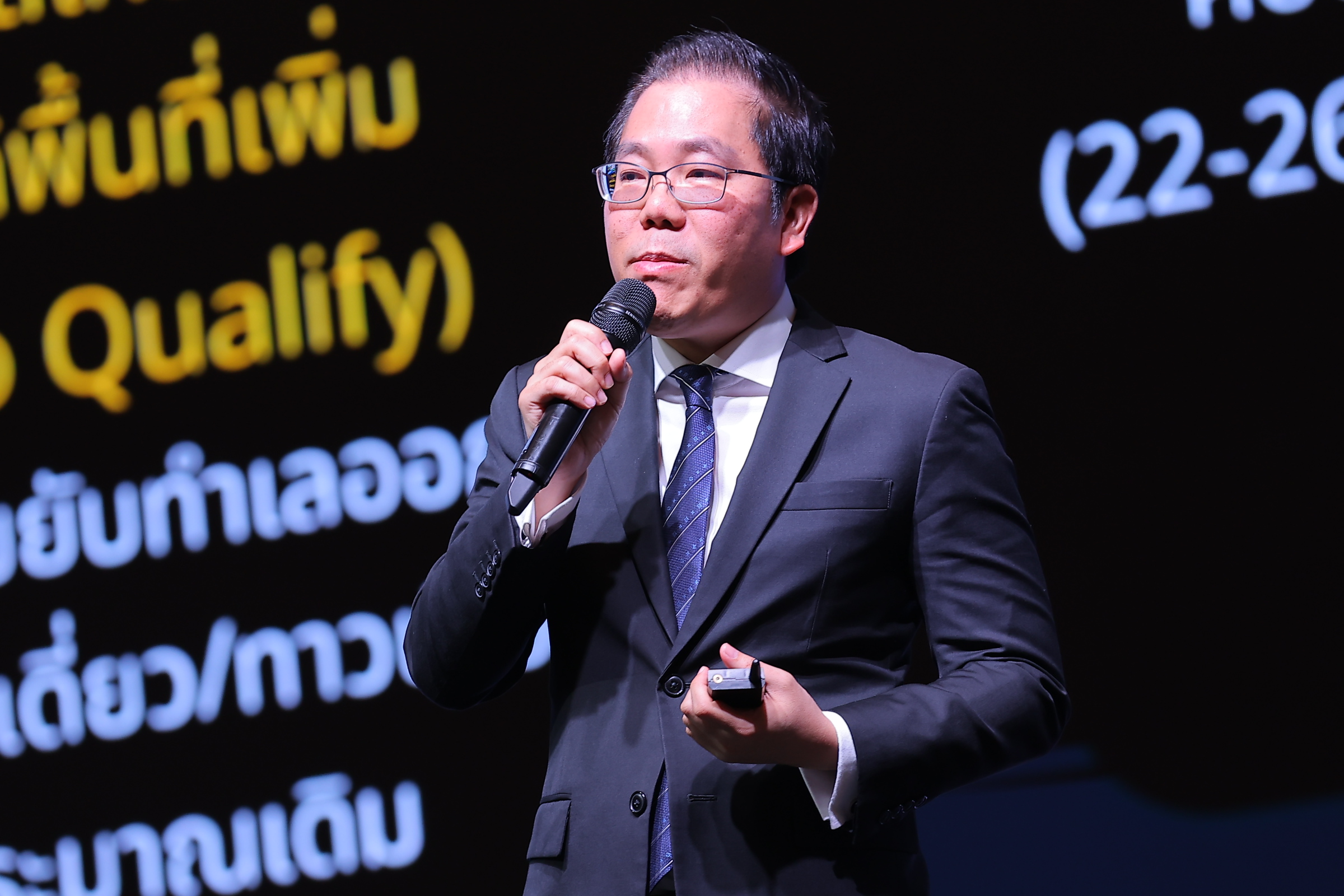
Meanwhile, Dr. Mana Nimitwanich, Director of the Real Estate Information Center (REIC), believes that “the city center is no longer a single point,” and that the city is growing into a “Network City” — for example, Rama 9–Ratchada, which can be considered a New CBD, while Bang Na–Suvarnabhumi will become the Eastern Business District. In addition, there are urban expansions growing along mass transit lines and new infrastructure, as well as suburban areas that are now more conveniently connected
From merely “build to sell” to building an Ecosystem that gives the city space for activities and living — this is the “Beyond the City” perspective from Uraseth Navanukroh, Deputy Chief Executive Officer of the Investment Division, ONE Bangkok, who emphasizes that urban development requires the government sector, private sector, and consumers to move forward hand in hand for the benefit of all parties, whether in terms of employment, business success, or the quality of life of city residents
Understanding Consumer Buying Behavior
The expansion of modern cities has changed consumers’ perspectives on purchasing a home. Decisions are no longer based solely on the size of the space, but supported by a variety of factors, such as Pet Friendly—shared spaces of happiness with beloved pets—as well as greater flexibility in lifestyle. This is not limited to applying for a home loan only, but also Flexible Ownership in the form of long-term leases (Leasehold) or Rent to Own, which are gaining increasing interest among the younger generation.
Spending time thoroughly researching information through Virtual Tours and social media before deciding to visit a project in person, placing importance on reviews, long-term common area fees, and value assessment (Yield) rather than short-term promotions, along with modern technology transforming lifestyles, means consumers now want flexible spaces that support Work from Anywhere and Smart Living
When cities change, home buying, workplaces, commuting, and lifestyles change accordingly—and this may be the definition of the city of the next era: better connected, less time-consuming, and sustainably growing.