

Cushman & Wakefield reveals that the prime land market has fully turned into a “buyer’s” market after developers crowded in with offers nearly half below asking prices, citing impacts from surging household debt and bank loan rejections that crushed condominium purchasing power. The peak price cycle has ended, and landlords are advised to urgently adjust their plans — switching from outright sales to “long-term leasing” to generate cash flow while reducing vacant land tax burdens.
Meanwhile, condominium purchasing power in Q2/2025 is facing an all-around economic storm. After Thais lost confidence amid fears over volatile global war impacts, they rushed to delay spending, forcing small developers to put the brakes on project launches, while major players adjusted their survival strategies, pushing average prices to their highest level since 2020 by pivoting along electric train lines to target premium, deep-pocketed buyers in hopes of reducing the risk of loan rejections.
Mr. Worat Sirisatdanukul, Senior Manager of Capital Markets and Investment at Cushman & Wakefield Thailand, revealed that over the past several decades, land prices in the central business district (CBD) and surrounding areas were driven by fierce land-banking competition among real estate developers for condominium projects, causing prices to rise continuously.
However, the peak of the land price cycle ended during the COVID-19 crisis and has not been able to recover to its previous level, as the real estate market faces an all-around economic storm: shrinking purchasing power, high household debt, and rising loan rejection rates from financial institutions — all of which directly affect consumers’ purchasing power.

Warning signal to landlords: the market belongs to buyers, and slashing sale prices is unsustainable. "Long-term leasing" is recommended as the way out
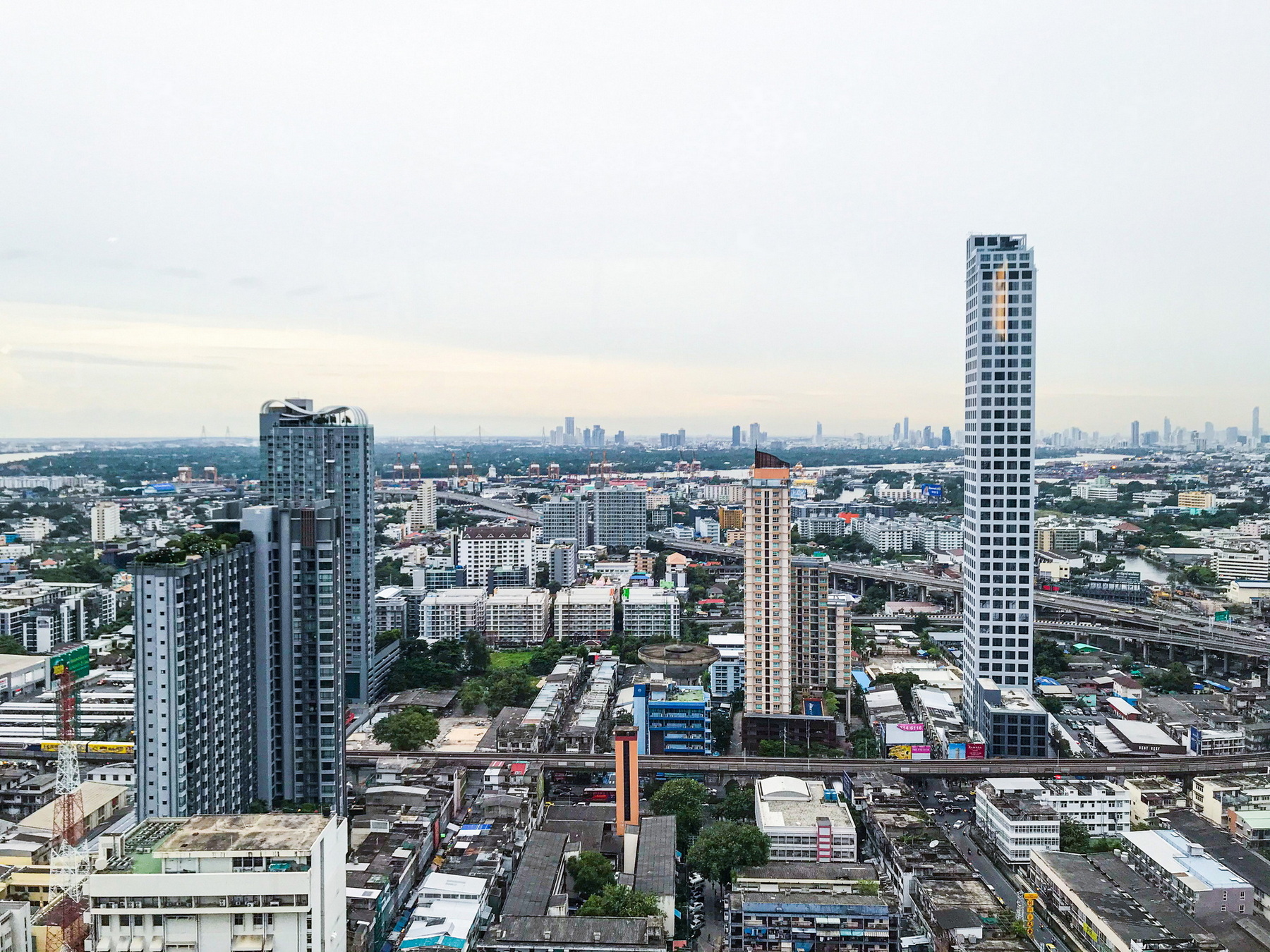
These negative factors have directly impacted real estate developers, who can no longer bear high land costs as in the past. Many have had to negotiate lower prices to maintain survival profit margins. This is clearly reflected in prime roadside locations along the BTS Bang Chak to BTS Udom Suk stretch, where landowners still list prices as high as 900,000 – 1,000,000 baht per square wah, but developers’ actual purchase offers come in below 600,000 baht per square waht.
Mr. Worat added that this phenomenon is a clear signal that land prices will no longer rise. If landowners must sell today, they may have to accept selling below their desired price. Therefore, from an asset management perspective, the strategy of "long-term leasing for 10 – 30 years" is a more worthwhile option than outright sale in a buyer’s market.
Beyond avoiding price cuts, it also generates steady cash flow while retaining ownership. Moreover, it significantly reduces land and building tax burdens from the vacant land rate, making it the most fitting strategy in a slowing market.
Q2/2026 Condominium Purchasing Power Slows Amid Fears Over Volatile Global Factors
Regarding condominium purchasing power, Mr. Surachet Kongcheep, Head of Research and Consulting at Cushman & Wakefield Thailand, revealed data as of Q2/2026 showing that Thai purchasing power has clearly slowed in line with economic conditions, due to a lack of confidence in external factors, especially the volatility of the war situation in the Middle East, which has continuously affected oil prices and the cost of living. Although consumers have begun to adapt to some extent, the uncertainty of the situation remains a risk factor pressuring household expenses.
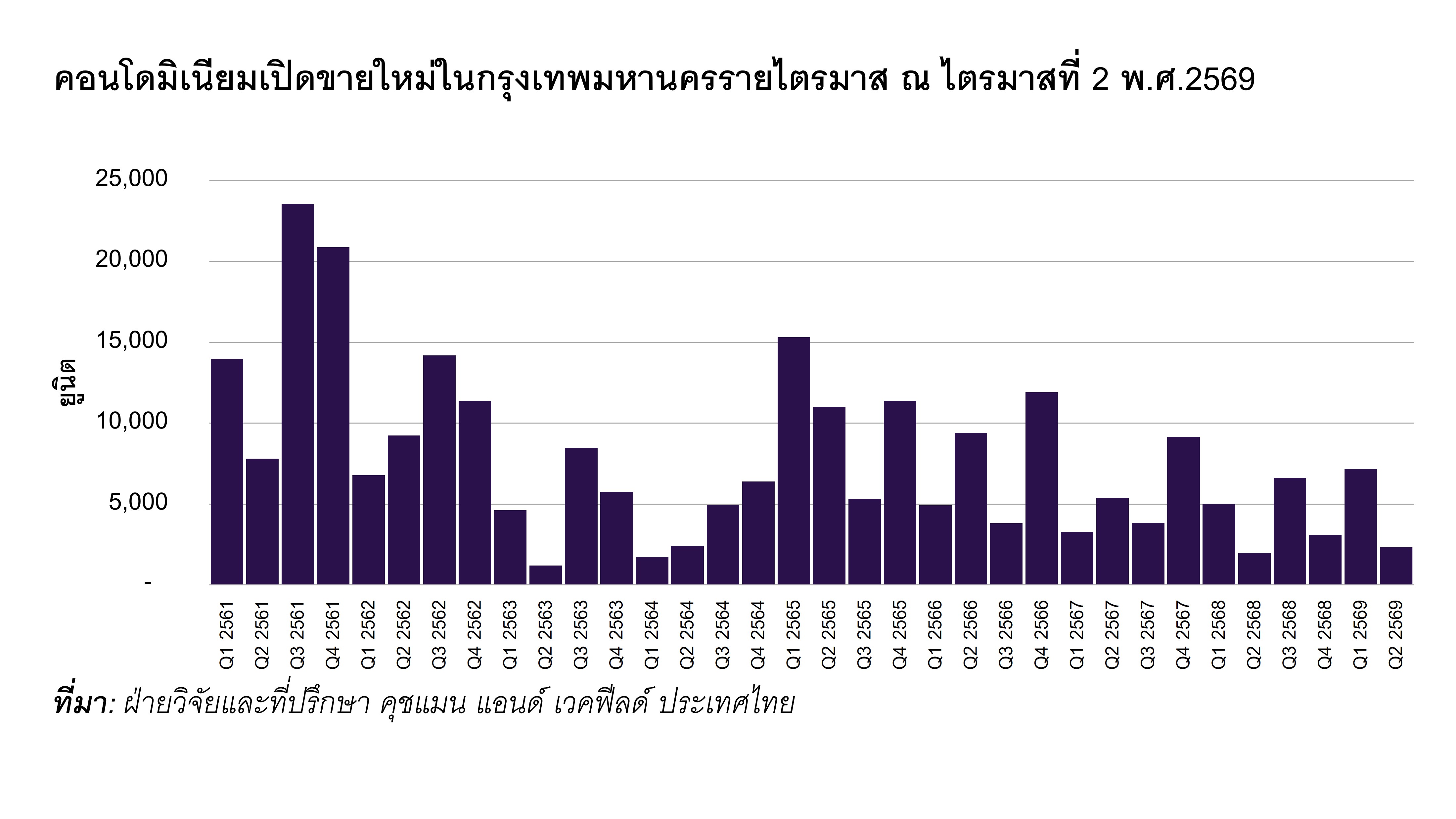
This slowdown has a direct impact on the condominium market, which is an asset requiring a large lump sum of money and long-term debt commitments, as reflected in the still-high housing loan rejection rate, amid conditions where there are still no clear additional policies or stimulus measures for the real estate sector from the government. Meanwhile, new condominium launches in Q2/2026 totaled approximately 2,332 units, down about 67% compared to the previous quarter (QoQ).
However, in the overall first half of 2026, cumulative launches stood at approximately 9,501 units, still growing 42% compared to the same period last year (YoY). For the full-year 2026 trend, it is forecast that new condominium launches may exceed the original target of 17,000 units estimated early in the year.
This is because some developers have begun gradually launching sales and revealing more new project development plans, with the full-year total estimated to have the potential to rise but not exceed 20,000 units. That said, global negative factors that could intensify again must still be monitored, especially the conflict situations in the Middle East and other regions that affect the overall economy.
Average Selling Price Hits Highest Level Since 2020 as Developers Shift to Premium Segment and Areas Along Electric Train Routes
Looking deeper into the locations of new condominium launches in Q2/2026, over 90% are located along the BTS Sukhumvit electric train line (outside the CBD), while the rest are scattered in the outskirts of Bangkok. As a result, the average selling price in this quarter surged to approximately 150,420 baht per square meter, an increase of up to 78.4% from the previous quarter. This factor pushed the average selling price in the first half of 2026 up to 120,360 baht per square meter, the highest record since 2020.
Although the market is in a slowdown, the rise in average selling prices is because developers have turned to focus on high-purchasing-power buyer segments to escape the problem of difficult loan approvals in the lower price tiers, combined with project locations that are all near or within walking distance of electric train stations. The expansion of the electric train network into suburban areas has driven up land costs and inevitably pushed condominium selling prices higher as well.
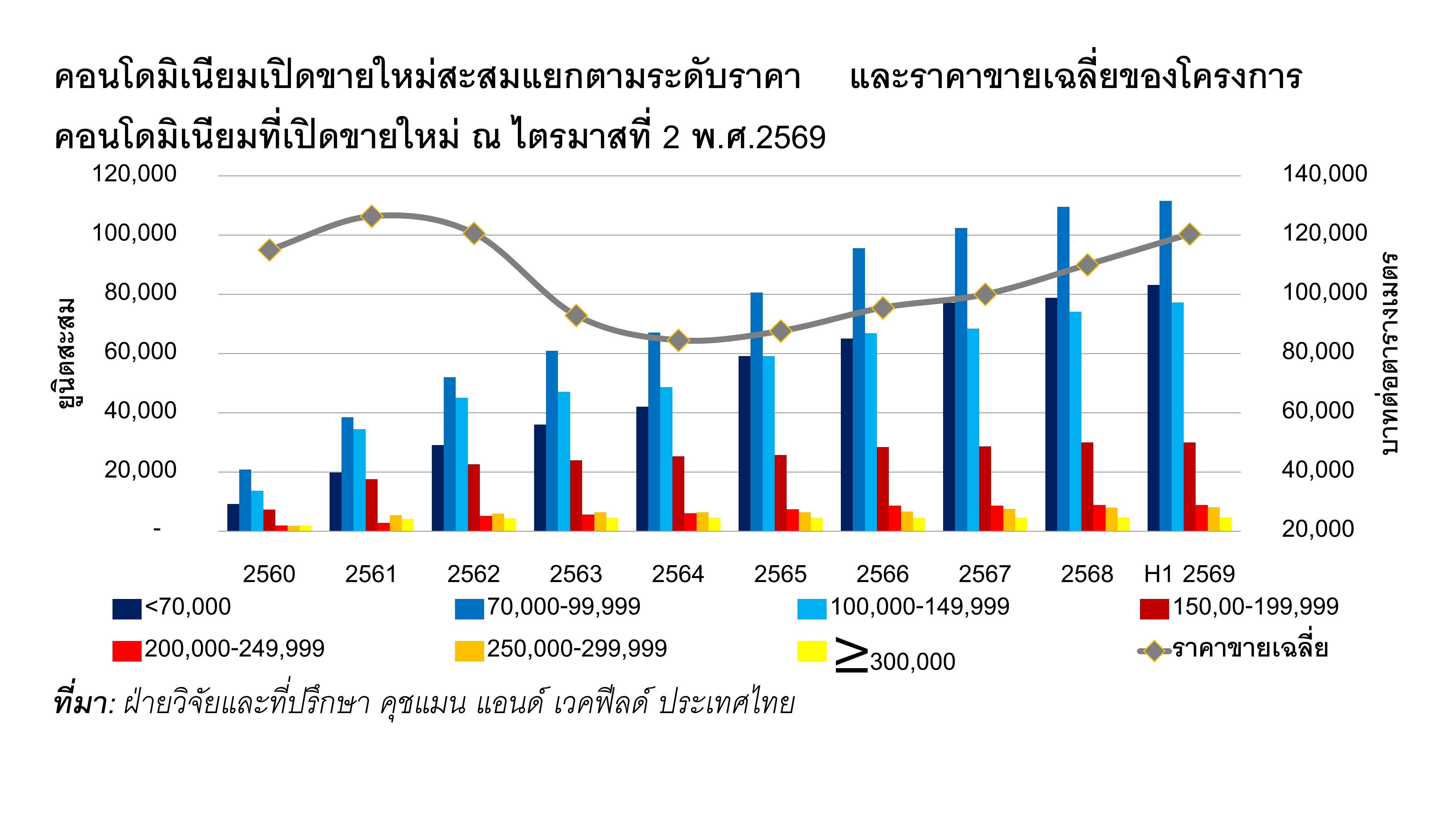
Small players hit the brakes – large developers adapt by emphasizing "completed, ready to move in" to deter speculators
New project launches in the first half of 2026 were driven almost 100% by listed-market operators, with only 68 units from developers outside the stock market out of a total of 9,501 units. This reflects that medium and small operators chose to delay new project launches to wait and see the market direction in the second half of the year, as well as government real estate stimulus measures. At the same time, some operators have begun adjusting their strategy, turning to selling completed, ready-to-move-in (Ready to Move) projects
in the form of small condominiums with relatively few units, priced from 180,000 baht per square meter and up. Notably, in the past 1–2 years, there have been almost no condominium launches off the electric train lines, because developers want to target genuine owner-occupier buyers (Real Demand) who need title transfer, rather than short-term speculators. In addition, many are tackling the problem and reducing the risk of loan rejections by pre-screening credit readiness or launching campaigns such as "installments before moving in" to help push transfer volumes along more smoothly.
As for foreign buyers, the overall picture in Q2/2026 declined noticeably, especially Chinese buyers, who contracted sharply, with no other group yet stepping in to fully replace them. Although there were some Myanmar buyers, they accounted for only a small share. As for Russians, despite strong growth in Phuket and Pattaya, they still do not play much of a role in Bangkok.
As for foreign nationals of other nationalities, although their numbers have increased, they still cannot compensate for the loss of Chinese buyers. Meanwhile, buyers from the Middle East, who once made headlines, have not shown clear expansion—a key issue to watch closely in the second half of 2026, Mr. Surachet concluded.