

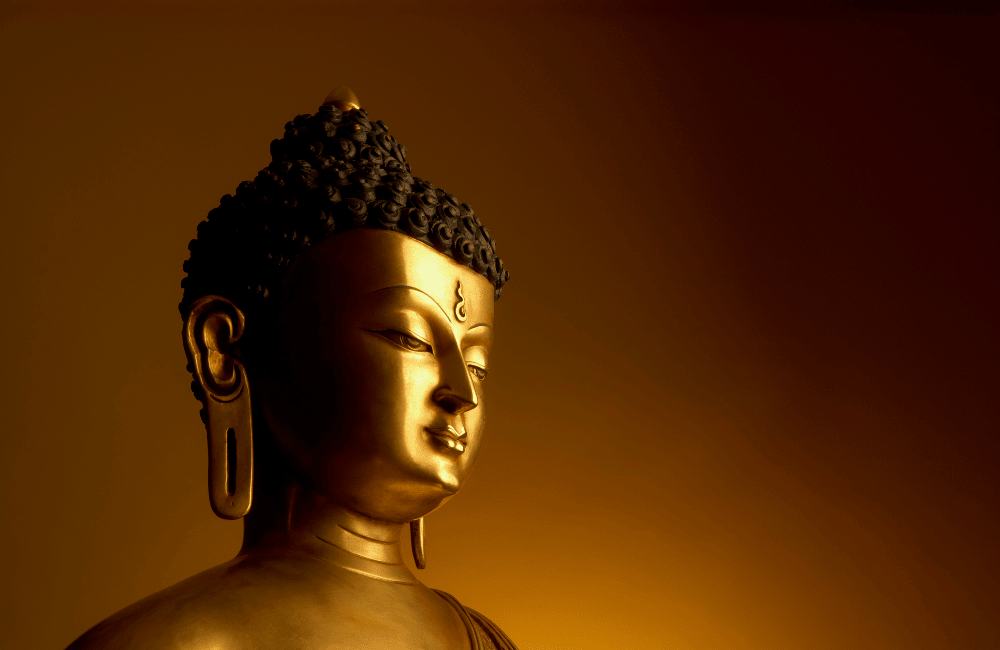
Chanting to worship the Buddha at home is not merely a matter of belief, but also a way to create calm and enhance positive energy in life, protecting the home so it remains peaceful and happy. For those who want to chant and pay respects to the Buddha at home but don’t know where to start? In this article, Livinginsider has compiled daily chanting prayers, including prayers for beginners, articles on chanting to worship the Buddha on Buddhist holy days, and auspicious prayers to bring blessings to your home and family—complete for every occasion.
The Importance of Chanting to Worship the Buddha on Buddhist Holy Days

Chanting to worship the Buddha on Buddhist holy days is extremely important spiritually, helping to foster inner peace and build a connection between the mind and religion, in order to accumulate merit and auspiciousness in daily life. Chanting on Buddhist holy days is a great opportunity to accumulate merit and reflect on goodness, helping life become more peaceful and prosperous. In addition, paying respects to the Buddha at home is another way to make wishes and ask for the Buddha’s protection from bad things
Preparation Before Chanting
- Clean the area and body You should clean the area used for chanting andworshipping Buddha images at home, such as the Buddha shrine or worship corner, as well as your body before chanting, in order to maintain cleanliness, tidiness, and create a good atmosphere for making merit
- Prepare offerings Prepare incense, candles, flowers, and clean water for worshipping the Buddha, which will help enhance the sanctity of the chanting
- Calm your mind Before beginning the chant, take a moment to settle your mind, reflect on the virtues of the Buddha, the Dhamma, and the Sangha, and adjust your mood to be ready so that the chanting can reach your heart even better
- Choose appropriate chants You should choose chants that align with your intentions and are suitable for reciting on Buddhist holy days, so that your worship of the Buddha carries good meaning and matches your wishes
Basic Chants for Worshipping the Buddha
Homage to the Triple Gem Chant
The Homage to the Triple Gem chant is recited as an opening before starting to chant forworshipping Buddha images at home. While chanting, focus your mind on the three virtues of the Buddha: the virtue of compassion, the virtue of purity, and the virtue of wisdom
“Namo Tassa Bhagavato Arahato Samma Sambuddhassa (3 times)”
Homage to the Triple Gem Chant
The Homage to the Triple Gem chant begins the prayer session by paying respect to the Buddha, the Dhamma, and the Sangha, expressing reverence and centering the mind to be calm and ready for worship.
“Araham Sammasambuddho Bhagava Buddham Bhagavantam Abhivademi (bow)
Svakkhato Bhagavata Dhammo Dhammam Namassami (bow)
Supatipanno Bhagavato Savakasangho Sangham Namami (bow)”
Chants in Praise of the Virtues of the Buddha, the Dhamma, and the Sangha
These chants praise the virtues of the Buddha, the Dhamma, and the Sangha. They help strengthen faith and serve as a recollection of the virtues of all three, before chanting, recite Namo Tassa Bhagavato, Arahato, Sammasambuddhassa (3 times)
Chant in Praise of the Buddha’s Virtues
“Itipiso Bhagava Araham Sammasambuddho
Vijjacaranasampanno Sugato Lokavidu
Anuttaro Purisadhammasarathi
Sattha Devamanussanam Buddho Bhagavati”
Chant in Praise of the Dhamma’s Virtues
“Svakkhato Bhagavata Dhammo
Sanditthiko Akaliko Ehipassiko
Opanayiko Paccattam Veditabbo Vinnuhi”
Virtues of the Sangha
“Supatipanno Bhagavato Savakasangho
Ujupatipanno Bhagavato Savakasangho
Nayapatipanno Bhagavato Savakasangho
Samicipatipanno Bhagavato Savakasangho
Yadidam Cattari Purisayugani Attha Purisapuggala
Esa Bhagavato Savakasangho
Ahuneyyo Pahuneyyo
Dakkhineyyo Anjalikaraniyo
Anuttaram Punnakkhettam Lokassati”
Chants for Auspiciousness
Jaya Siddhi Gatha (Verses of Victory)
The Bahum Mahakaya verse, also known as "Jaya Siddhi Gatha" is a chant believed to have the power to protect against and remove various obstacles in life. When reciting this chant for others, use the word "Te" which means "you" (referring to that person), but if reciting it for yourself, use the word "Me" which means "I" (myself).
“Bāhuṃ sahassam-abhinimmita-sāyudhantaṃ, grīnamekhalaṃ udita-ghora-sasenamāraṃ
dānādidhamma-vidhinā jitavā munindo, tentejasā bhavatu te* jayamaṅgalāni
mārātirekamabhiyujjhita-sabbarattiṃ, ghorampanāḷavaka-makkhamathaddhayakkhaṃ
khantī-sudanta-vidhinā jitavā munindo, tentejasā bhavatu te* jayamaṅgalāni
nāḷāgiriṃ gajavaraṃ atimattabhūtaṃ, dāvaggicakkam-asanīva sudāruṇantaṃ
mettambuseka-vidhinā jitavā munindo, tentejasā bhavatu te* jayamaṅgalāni
ukkhittakhaggaṃ atihantha-sudāruṇantaṃ, dhāvantiyojana-pathaṅgulimālavantaṃ
iddhībhisaṅkhata-mano jitavā munindo, tentejasā bhavatu te* jayamaṅgalāni
katvāna kaṭṭhamudaraṃ iva gabbhinīyā, ciñcāya duṭṭhavacanañca janākamajjhe
santena soma-vidhinā jitavā munindo, tentejasā bhavatu te*
jayamaṅgalāni saccaṃ vihāya mati-saccakavādaketuṃ, vādābhiropita-manaṃ
atiandhabhūtaṃ paññāpadīpajalito jitavā munindo, tentejasā bhavatu te*
jayamaṅgalāni nandopananda-bhujagaṃ vibbudhaṃ, mahiddhiṃ puttena thera-bhujagena
damāpayanto iddhūpadesa-vidhinā jitavā munindo, tentejasā bhavatu te*
jayamaṅgalāni duggaha-diṭṭhi-bhujagena suḍaṭṭhahatthaṃ brahmaṃ
visuddhijutimiddhi-bakābhidhānaṃ ñāṇāgadena vidhinā jitavā munindo, tentejasā bhavatu te*
Chaya mangala ni etapi buddhajaya mangala atthagatha yovacano
tina dine sarate matandi hitvana neka vividhani cupaddavani mokkham sukham adhigameyya naro sapanno”
Mangala Sutta Chanting
The Mangala Sutta enhances auspiciousness for the home and protects its residents from various dangers. It can be chanted on Buddhist holy days, New Year's Day, or as part ofdaily prayers at homeas well. For those who have just bought a house orsecond-hand house, chanting this sutta daily will further enhance auspiciousness for the home and family.
“Evamme sutam. Ekam samayam bhagava savatthiyam viharati jetavane anathapindikassa arame athakho annatara devata abhikkantaya rattiya abhikkanta vanna kevalakappam jetavanam obhasetva yena bhagava tenupasankami upasankamitva bhagavantam abhivadetva
ekamantam atthasi eka mantam thita kho sa devata bhaga vantam gathaya ajjhabhasi bahu deva manussa ca mangalani acintayung akankhamana sotthanam bruhi mangalamuttamam
Asevana ca balanam panditananca
sevana puja ca pujaniyanam etammangalamuttamam. Patirupadesavaso ca pubbe ca katapunnata attasammapanidhi ca etammangalamuttamam. Bahusaccanca sippanca vinayo ca susikkhito subhasita ca ya vaca etammangalamuttamam. Matapituupatthanam puttdarassa
sangahoanakula ca kammanta etammangalamuttamam. Dananca dhammacariya ca nata kananca sangaho anavajjani kammani etammangalamuttamam. Arati virati papa majjapana ca sannyamoappamado ca dhammesu etammangalamuttamam. Garavo ca nivato ca santutthi ca katannuta
Kalena dhammassavana etam mangalamuttamam... Khanti ca sovacassata samana nanca dassanam kalena dhammasakaccha etam mangalamuttamam... Tapo ca brahmacariyanca ariyasaccana dassanam
Nibbanasacchikiriya ca etam mangalamuttamam...
Phutthassa lokadhammehi cittam yassa na kampati asokam virajam khetam etam mangalamuttamam... Etadisani katvana sabbatthamaparajita sabbattha sotthim gacchanti tantesam mangalamuttamanti...”
The Ratana Sutta Chant
The Ratana Sutta, or Ratana Suttam, is aBuddhist holy day (Wan Phra) chantthat helps protect against dangers from evil things and illnesses. It speaks of the virtues of the Buddha, the Dhamma, and the Sangha, asking them to bestow blessings upon those who recite this chant.
“Yanidha bhutani samagatani bhummani va yaniva antalikkhe sabbe va bhuta sumana bhavantu athopi sakkacca sunantu bhasitam tasma hi bhuta nisametha sabbe mettam karotha manusiya pajaya diva ca ratto ca haranti ye baling tasma hi ne rakkhatha appamatta...
Yamkinci vittam idha va huram va saggesu va yam ratanam panitam na no samam atthi tathagatena idampi budthe ratanam panitam etena saccena suvatthi hotu...
Khayam viragam amatam panitam yadajjhaga sakyamuni samahito na tena dhammena samatthi kinci idampi dhamme ratanam panitam etena saccena suvatthi hotu...
Yambuddhasettho parivannayi sucim samadhim anantarikannamahu samadhina tena samo na vijjati idampi dhamme ratanam panitam etena saccena suvatthi hotu...
Ye puggala attha satam pasattha cattari etani yugani honti te dakkhineyya sugatassa savaka etesu dinnani mahapphalani idampi sanghe ratanam panitam etena saccena suvatthi hotu...
Ye suppayutta manasa dalhena nikkamino gotamasasanamhi te patipatta amatam vigayha laddha mudha nibbutim bhunjamana idampi sanghe ratanam panitam etena saccena suvatthi hotu...
Yathindakhilo pathaving sito siya catuppabbhi vatebhi asampakampiyo; tathupamam sappurisam vadami, yo ariyasaccani avecca passati. Idampi Sanghe ratanam panitam, etena sacca suvatthi hotu.
Ye ariyasaccani vibhavayanti gambhirapannena sudesitani; kincapi te honti bhusappamatta, na te bhavam atthamamadiyanti. Idampi Sanghe ratanam panitam, etena sacca suvatthi hotu.
Sahavassa dassanasampada tayassu dhamma jahita bhavanti sakkayaditthi vicikicchitanca silabbatam vap? yadatthi kinci catuhapayehi ca vippamutto cha cabhinatthani abhabbo katum. Idampi Sanghe ratanam panitam, etena sacca suvatthi hotu.
Kincapi so kammam karoti papatam kayena vacaya udacetasa va; abhabbo so tassa paticchadaya ababbata ditthapadassa vutta. Idampi Sanghe ratanam panitam, etena sacca suvatthi hotu.
Vanappagumbe yatha phussitagge gimhanamase pathamasmi gimhe; tathupamam dhammavaram adesayi nibbanagamim paramam hitaya. Idampi Budhe ratanam panitam, etena sacca suvatthi hotu.
Varo varabbu varado varaharo anuttaro dhammavaram adesayi. Idampi Budhe ratanam panitam, etena sacca suvatthi hotu.
KhInam puranam navam natthi sambhavam virattacittayatike bhabasmim; te khInabija avirulhicchanda nibbanti dhira yathayampadipo. Idampi Sanghe ratanam panitam, etena sacca suvatthi hotu.
Yanidha bhutani samagatani bhummani va yani va antalikhe; tathagatam devamanussapujitam Buddhaj namassama suvatthi hotu.
Yanidha bhutani samagatani bhummani va yani va antalikhe; tathagatam devamanussapujitam Dhammam namassama suvatthi hotu.
Yanidha bhutani samagatani bhummani va yani va antalikhe; tathagatam devamanussapujitam Sangham namassama suvatthi hotu.”
Chant for Radiating Loving-Kindness
Chant for Radiating Loving-Kindness to Oneself
Aham sukhi homi
(May I be happy)
Aham niddukkho homi
(May I be free from suffering)
Aham avero homi
(May I be free from enmity)
Aham abyapajjho homi
(May I be free from obstacles and danger)
Aham anigho homi
(May I be free from physical and mental suffering)
Sukhi attanam pariharami
(May I have happiness of body and mind, and may I protect myself from all suffering and danger)
Verses of Loving-Kindness for All Beings
Sabbe satta
(All beings, who are companions in suffering, birth, old age, sickness, and death, all together)
Avera hontu
(May you be happy, be happy indeed, and may you have no enmity toward one another)
Abbyapaccha hontu
(May you be happy, be happy, and may you never harm one another)
Anigha hontu
(May you be happy, be happy, and may you be free from physical and mental suffering)
Sukhi attanam pariharantu
(May you have happiness of body and mind, and may you protect yourselves from all misfortune and danger)
Water-Pouring Dedication of Merit Chant
After chantingand paying respects to the Buddha images in the home, it is recommended to pour water to dedicate the merit to one’s ancestors, karmic creditors, guardian deities, spirits of the land and roads, and household spirits, so that they may all rejoice in the merit and receive their share of the merit from this occasion.
Short water-pouring chant: Idam me natinam hotu sukhita hontu natayo
Full water-pouring chant
(Opening) Handa mayam uddisana adhitthana gathayo bhanama se .
Imina punna kammena upajjhaya gunuttara
Acariyupakara ca mata pita ca nataka
Suriyo candima raja gunavanta narapi ca
Brahma-mara inda catura-lokapala ca devata
Yama mittamanussa ca majjhatta verikapi ca
Sabbe satta sukhi hontu punnani pakatani me
Sukhanca tividham dentu khippam papetha vo matam
Imina punna-kammena imina uddisena ca
Khippaham sulabhe ceva tanhupadanachedanam
Ye santane hina dhamma yava nibbanato mamam
Nassantu sabbadayeva yattha jato bhave bhave
Ujucittam satipanna sallekho viriyamhina
Mara labhantu nokasam katunca viryesu me
Buddhadipavaro nattho dhammo nattho varuttamo
Nattho pacekabuddho ca sangho natthottaro mamam
Tesottamanubhavena marokasam labhantu ma.
Note: After finishing pouring the water, pour the water at the base of a large tree
Article Summary

Regularly chanting prayers and paying respects to the Buddha is considered a religious activity that has long been part of Thai people’s lives, as it is important both spiritually and for protecting the home from various dangers. However, for those looking for a new home, whether it be second-hand houses, detached houses, houses near the sky train or even apartments, condos for rent at Livinginsider, we have gathered houses and condos for rent both in Bangkok and provinces throughout Thailand all in one place. We guarantee that each project offers good living, prosperity, and safety, as well as beauty and comfort to match every lifestyle!