

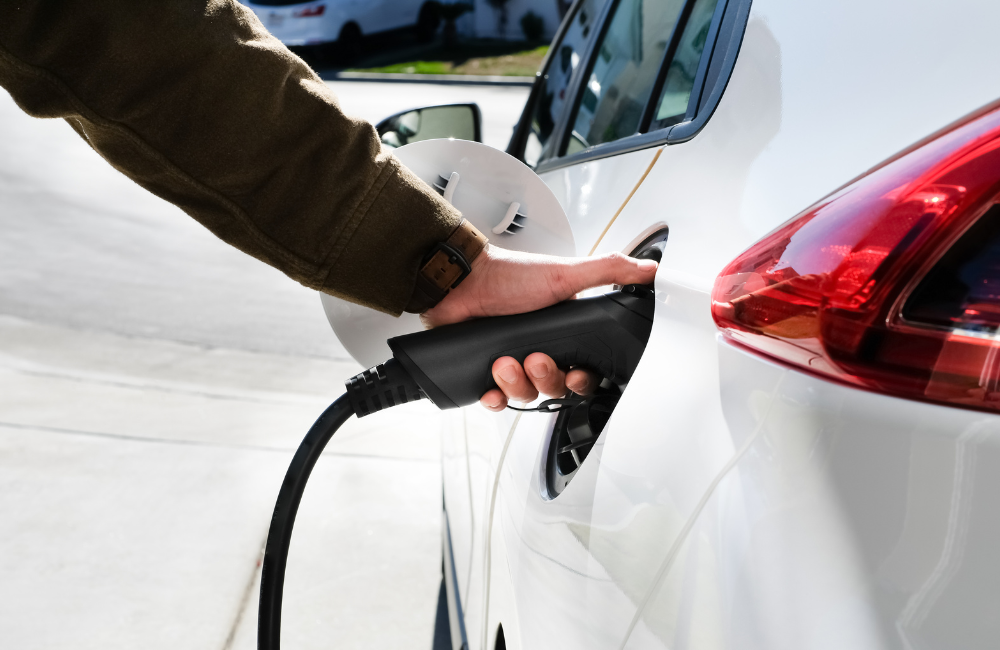
For those who own an electric car, don't just scroll past this article. We've gathered everything you need to know about installing an EV charger at home. Which type of charging connector should you choose, and what costs are involved? Scroll down to find the answers in the next section.
5 Things to Know Before Installing an EV Charger at Home
Many people may wonder ‘why install an EV charger at home’ since there are EV charging stations available for service anyway. The main reason is convenience of use. If you find the battery is running low, you can plug in and charge immediately without having to travel to various stations. But before installation, there are some essential things to know, as follows:
Electricity Meter
Generally, homes use a 15(45) electricity meter, but if you want to install an EV charger at home, you need to change to a 30(100) meter to accommodate the higher-than-usual electricity usage.
Main Electrical Cable Size
The standard for the main electrical cable used in home EV charger installation must be 25 sq.mm. or larger only. Generally, homes use a main cable size of 16 sq.mm., which is not sufficient for the job.

Breaker Box
This is another important item, because the breaker box is designed to protect against short circuits. You can install a separate breaker box dedicated to the EV charger.
Leakage Protection Device
Don't forget to check the leakage protection device every time before starting to install a home EV charger. If the charging cable does not have a leakage protection system, one must be installed immediately to add detection and circuit cut-off for user safety.
Installation Location
The best installation location should be in a shaded area. It is not recommended to install it in direct sunlight or rain, and you should choose a spot close to the main electrical panel to save on wiring costs. Importantly, the distance between the car's charging port and the charger installation point must not exceed 5 meters.
Home EV Charging Connectors: Which Type Should You Choose?
Home EV chargers should be the Double Speed Charge type, suitable for household electricity, which is alternating current (AC). Each charging session takes approximately 4-5 hours, depending on the capacity of the battery used.
What Are the Costs of Installing a Home EV Charger?
The costs of installing a home EV charger include: the charger unit, approximately 15,000-100,000 baht; an electricity meter in case you request an additional installation, approximately 700-2,500 baht; and wiring, electrical system setup, and other necessary equipment installation, starting from around 10,000 baht. This is calculated based on standard prices only. It is recommended to research the equipment for each car model and brand before installation.

After scrolling all the way to this conclusion, many of you who were previously hesitant about whether to install a home EV charger have probably found your answer by now, because the installation process is not as difficult as you might think—especially for those who own adetached house, which is even easier to install and more convenient to use. On the Livinginsider website platform, there are plenty of accommodations that cater to EV owners—no need to install a charger yourself. You can start searching here.